Health and Safety Policy for Landscapers Cricklewood
 This health and safety policy sets out how landscapers in Cricklewood manage risks, protect workers, and maintain safe working conditions across a wide range of outdoor projects. It applies to every task, from routine maintenance and planting to heavier clearance work and rubbish removal services carried out as part of our service area. The aim is simple: to complete every job efficiently while reducing harm to staff, clients, visitors, and the public.
Our company recognises that landscaping work can involve uneven ground, manual lifting, machinery, sharp tools, dust, weather exposure, and the handling of green waste or mixed rubbish. Because of this, safety is not treated as a separate activity. It is part of every stage of planning, delivery, and site clearance. All employees, contractors, and supervisors are expected to follow this policy and act responsibly at all times.
We also understand that property types and working conditions vary. Some sites may be private gardens, while others may include communal spaces, commercial grounds, or areas where landscape clearance and rubbish collection are required. In all cases, the same principles apply: assess the site, control the risks, and complete the work without creating danger to people or property.
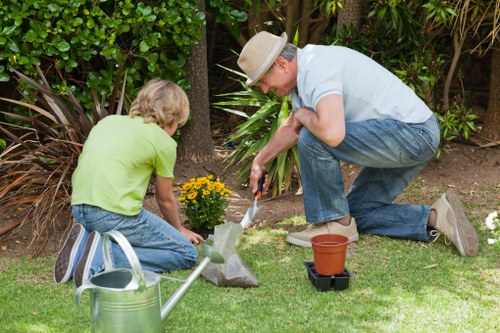 Risk assessment is carried out before work begins, especially when dealing with overgrown gardens, bulky waste, or areas with limited access. Supervisors identify hazards such as broken glass, hidden debris, unstable surfaces, trip hazards, pests, manual handling issues, and contact with tools or powered equipment. Where necessary, work methods are adjusted to reduce risk and protect everyone on site.
Employees are trained to use equipment correctly and to report defects immediately. This includes hedge cutters, strimmers, mowers, chippers, wheelbarrows, and vehicles used for transporting materials. Tools must be checked before use and stored securely after work. Damaged or unsafe equipment must never be used until it has been repaired or removed from service.
Personal protective equipment, or PPE, must be worn where required. Depending on the task, this may include gloves, safety boots, eye protection, hi-vis clothing, hearing protection, or dust masks. PPE is not a substitute for safe working practices, but it provides an important extra layer of protection during routine landscaping and garden waste clearance.
 Manual handling is a major concern in landscaping, particularly when moving soil, turf, stones, timber, green waste, or general rubbish. Staff are trained to lift safely, avoid twisting, use team lifting where needed, and choose suitable equipment for heavy or awkward items. Loads must never be carried in a way that blocks visibility or creates a hazard on uneven ground.
Weather conditions are monitored throughout the day. Heat, cold, rain, ice, wind, and poor visibility can all increase the likelihood of incidents. Work may be paused or rearranged if conditions become unsafe. Hydration, suitable clothing, and regular breaks are encouraged to help workers remain alert and capable throughout the job.
Public safety is equally important. When work takes place near footpaths, roads, entrances, or shared outdoor spaces, the area must be clearly managed. Materials and waste should be kept in designated zones, tools should not be left unattended, and any temporary hazards should be marked or restricted where appropriate. This is especially relevant during rubbish clearance jobs where access routes can become blocked by bags, branches, or other debris.
Environmental responsibility forms part of our safe working approach. Waste must be sorted and handled in line with appropriate disposal practices, with recyclable material separated where possible and contaminated or hazardous items identified before removal. Care is taken to avoid spills, noise nuisance, excessive dust, and unnecessary disturbance to neighbouring properties. A tidy site is not only professional; it also reduces the chance of accidents.
Supervision and communication are essential. Workers are expected to follow instructions, ask questions if anything is unclear, and stop work if they believe a task has become unsafe. Any accident, near miss, or unsafe condition must be reported without delay. Records are reviewed so that lessons can be learned and future risks reduced.
We also maintain clear standards for vehicle use. Drivers must be licensed and competent, loads must be secured properly, and vehicles should be checked before use. Safe loading and unloading are especially important when transporting branches, green waste, rubble, or general rubbish. No vehicle should be overloaded or driven in a way that could endanger road users or site occupants.
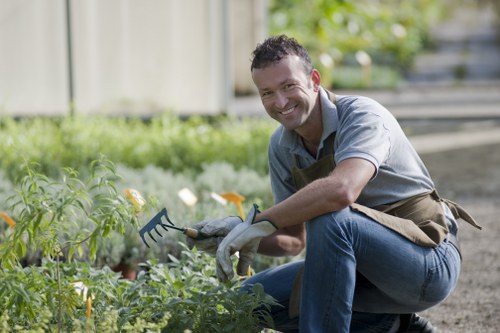 Emergency arrangements are in place for injury, fire, severe weather, or other unexpected events. Staff are briefed on basic first aid procedures, evacuation routes where relevant, and the correct response if an incident occurs. Work areas should always allow access for emergency services if needed. Prompt action can prevent a minor issue from becoming a serious one.
Training is reviewed regularly so that workers remain competent in safe lifting, equipment handling, site awareness, and waste management procedures. New staff receive induction before starting work, and refresher training is provided when methods or equipment change. Training is not limited to technical tasks; it also covers good judgement, communication, and personal responsibility.
 This policy is reviewed periodically to ensure it remains suitable, effective, and aligned with current working practices. As a landscaping company serving Cricklewood and surrounding areas, we are committed to keeping our operations safe, organised, and respectful of every site we enter. Whether the job involves planting, pruning, clearing, or rubbish removal, the same priority remains: safe work, careful planning, and consistent control of risk.

